
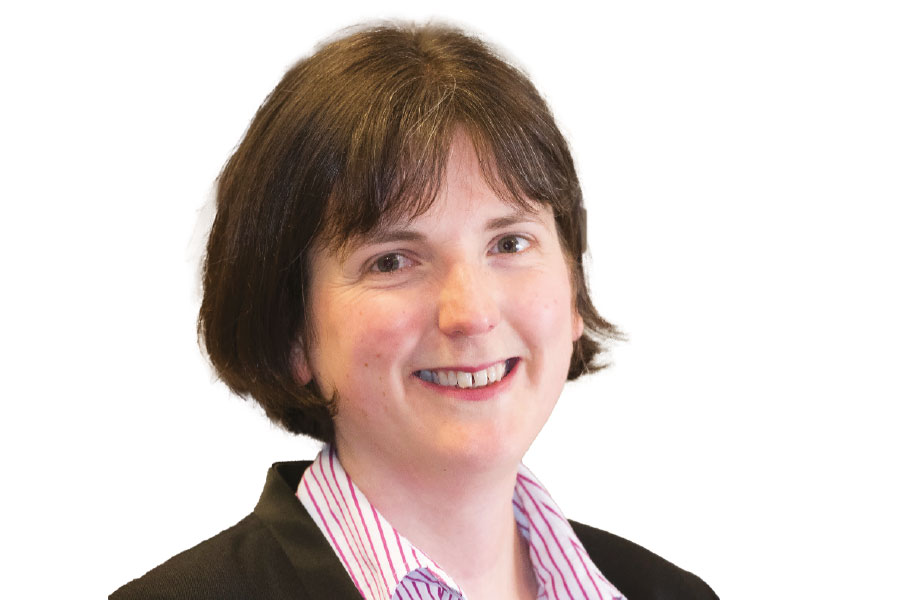

Helen Thornley provides tax planning strategies to help flooring businesses manage cashflow, protect margins and prepare for year-end pressures
FLOORING exists in a highly competitive marketplace where overheads can be high and margins can be equally thin. To illustrate the point, First Choice Flooring Solutions detailed in a blog last July (2025) that margins for speciality trades have shrunk from 2.4% in 2023 to 2.1% in 2024 and just 2% in 2025.
With profit being a function of revenue less cost, anything firms can do to reduce cost will help profitability. Tax is one such cost and as the end of the tax year approaches, it is always a good time to review personal and business tax planning.
Personal planning
Pensions, savings and gift aid are the hardy perennials which always need attending to before the end of the tax year.
Optimising pension planning (and/or gift aid contributions) is particularly critical for parents whose earnings are at or around two key thresholds: £60,000 (the point at which child benefit starts to be withdrawn) and £100,000 (at which tax-free childcare is withdrawn totally).
When testing if an individual’s income has gone over these limits, HMRC looks not at earnings but adjusted net income – which is total taxable income (including salary, benefits, profits and investment income) less pension contributions and gift aid contributions. For parents earning around those points, pension or gift aid contributions can be an effective way of keeping under thresholds and preserving entitlements to valuable benefits.
All but the highest earners can contribute up to the lower of £60,000 a year (the annual allowance) or their net relevant earnings into a pension. For self-employed individuals it can be hard to know what their net relevant earnings (broadly taxable profits) might be in advance of the completion of accounts.
For anyone self-employed who is considering a large contribution, it may be worth drawing up a set of management accounts before 5 April to check there will be enough profits to cover the desired contribution.
The other aspect of investment planning tied to the tax year end involves ISAs or Individual Savings Accounts. Individuals can contribute up to £20,000 a year to these tax-favoured investment wrappers, but the allowance is a strictly annual affair and it’s use it or lose it, because any unused allowance can’t be carried forward to future years.
From April 2027, the government is proposing to cap the cash element of ISA savings for the under 65s.
From that date, under 65s who want to use their full £20,000 allowance will need to put at least £8,000 into stocks and shares ISAs. Only the over 65s will be able to continue to put their full £20,000 allowance into cash ISAs.
Cash flow and employment costs
For most businesses, employment costs are a significant expense. From 1 April 2026, the national living wage (NLW) will increase by 4.1% to £12.71 per hour for eligible workers aged 21 and over. This represents an increase of about £900 to the salary of an individual working 35 hours a week on the NLW.
Increases to the minimum salary threshold can also be expected to cascade up the chain, with employees earning above the NLW looking to keep that margin between their pay and those on NLW.
Payroll taxes
Following big changes to employers national insurance contributions (NICs) rates in April 2025, rates and thresholds for Employers NIC are expected to be held until April 2028. But in the longer term, employers who operate pension salary sacrifice schemes could see further increases to their employer’s NIC bills as the chancellor looks to limit the tax benefits available.
Under salary sacrifice, an employee gives up some of their salary in exchange for an increase in the amount that their employer puts into their pension. This is attractive to both parties – the employee saves NIC at 8% or 2% (depending on whether they are a basic or higher rate taxpayer) while the employer saves at a higher rate of 15%.
Government is planning to reduce the benefits of this scheme from April 2029.
From that date only the first £2,000 of sacrificed salary will benefit from any NIC savings. There’s a long lead in to the measure, but employers should think about how many of their employees could be sacrificing more than the expected £2,000 upper limit and what the potential extra costs will be if it’s imposed.
Payroll administration
From April 2027, employers will be required to ‘payroll’ any staff benefits. This means that the value of benefits such as private medical insurance or professional subscriptions must be added to staff salaries each month and subjected to tax.
From an employer’s perspective, there’ll be a cash flow impact as it brings forward the cost of any Employer’s NIC due on those benefits. It’s also an administrative change and employers will need systems in place to manage this new process.
There may be some benefits in starting this process voluntarily from April 2026, to give the employer time to adjust before it becomes compulsory.
Inheritance tax
The new tax year brings big changes to the inheritance tax (IHT) position of business owners. Currently, owners in most well-structured businesses would expect to be able to pass business assets on without an IHT liability thanks to business property relief (BPR).
The maximum rate of BPR is currently 100% and there’s no cap on the value of qualifying assets that can benefit. This rate applies to shares in a trading company or an interest in a partnership. A lower rate of 50% relief applies to premises from which the business trades if they’re owned personally outside of the partnership or company.
From April 2026, the 100% relief will be capped to the first £2.5m of qualifying assets, with a lower 50% rate applying to the value of any assets over this allowance. This means an effective rate of 20% IHT for qualifying assets over £2.5m, where previously there would’ve been no charge.
Each shareholder or partner in a business will need to consider their position individually. Following changes at the budget in November, owners who are married or in a civil partnership may be able to benefit from an additional £2.5m allowance if their spouse or civil partner isn’t using theirs.
The business as a whole should also consider the potential costs and cash flow issues if a shareholder/partner dies unexpectedly, as their family may hope to be able to extract cash from the business to pay any IHT liability.
Profit extraction
For incorporated businesses, the tax on dividends is due to increase from 6 April 2026. Basic rate taxpayers will pay tax at 10.75% (previously 8.75%) and higher rate taxpayers 35.75% (previously 33.75%). There’s no change to the additional dividend rate which applies to very high earners.
There may be a modest benefit in accelerating some dividends into the 2025/26 tax year, depending on the shareholder’s individual position and benefit entitlement. The company will also need sufficient accumulated profits to allow for these additional dividends.
Equipment purchases
Tax relief for items of plant and machinery is given via a system of capital allowances. While some changes were made at budget 2025, they’ll only affect those spending over £1m in any given year. Most spending less than that will find the existing annual investment allowance (AIA) is sufficient to give upfront relief on qualifying expenditure.
Capital gains tax
For anyone thinking of selling their business soon, the benefit of business asset disposal relief (BADR) will be reduced again from April 2026.
The conditions for BADR are complex but, broadly, someone selling all or part of a business they have owned for at least two years – or selling assets which were used in a business which has ceased in the past three years – may be entitled to lower rates of capital gains tax (CGT) on the first £1m of gains.
Since 6 April 2025 this rate has been 14%, but it’s due to increase to 18% from 6 April 2026. Any gains above the limit will be taxable at 24%. BADR is a lifetime allowance, so will be reduced if someone has made previous qualifying gains in the past.
Business tax compliance
If a business fails to pay or file on time they run the risk of penalties for late filing, interest on late payments and penalty charges for late payment.
Late filing penalties
For incorporated businesses, the chancellor announced increases in the fines for late filing. Most of these are doubling with effect from 1 April 2026. A late corporation tax return will attract a penalty of £200, rising to £400 if the return is more than three months late.
On the other hand, for sole traders, there’s a welcome ‘soft landing’ for those moving into making tax digital (MTD) from April 2026. Under MTD, sole traders with a turnover of more than £50,000 will be required to use software to keep their records and file quarterly summaries of their income and expenses with HMRC.
Late payment charges
Interest on overdue tax increased significantly in April 2025, with interest now charged most overdue tax at 4% over base. Previously HMRC’s margin was only 2.5% over the base rate. At the time of writing this means interest will accrue on late paid tax at the hefty rate of 7.75%. Managing cashflow to stay on top of tax bills has therefore never been so important.
If a business is struggling to meet tax liabilities – including income tax, payroll taxes, VAT or corporation tax – then it’s important to contact HMRC and set up a time to pay arrangement. While it won’t stop interest accruing, it’ll prevent additional late payment penalties occurring on top.
Summary
Tax has never been so taxing. Consequently, planning ahead is essential as is good professional advice.
www.att.org.uk
Helen Thornley is a technical officer at the ATT