Where does Taterra sit in your wider strategy?
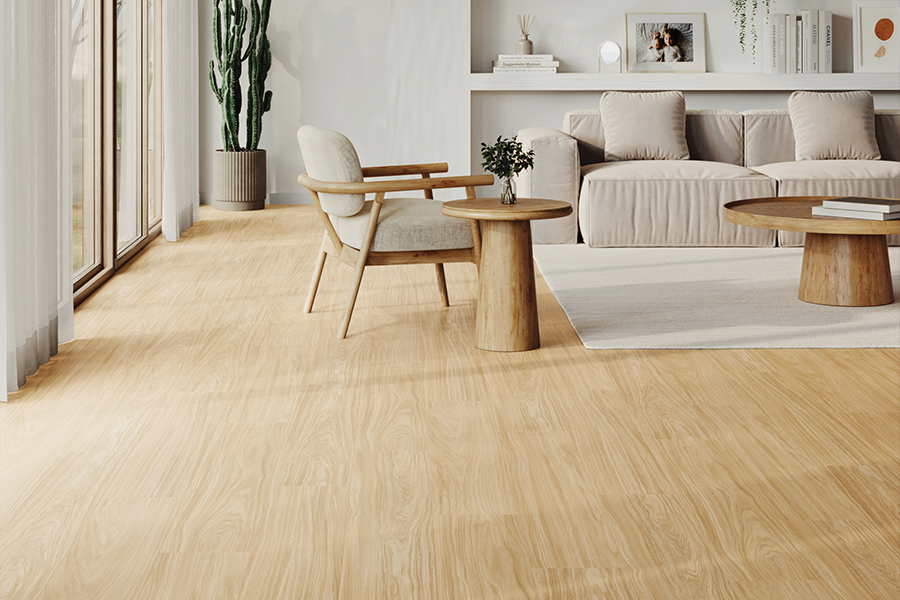
Taterra is a really exciting product for us. It’s a non-vinyl resilient, so it’s not PVC, but it still delivers the wear resistance and waterproof characteristics you’d normally associate with PVC products. It’s also very unique – we’ve patented the technology – and it genuinely looks and feels like wood. That’s the key thing.
If it performs so well, were there any gaps identified by the trade?
Yes, and this is really important. One of the main pieces of feedback we got from contractors was that it wasn’t available as a glue-down option. In commercial environments – restaurants, bars, retail spaces – that’s a big issue. Often the floor is laid before everything else is finalised, like where the bar or fixtures will go. Contractors are used to working with carpet or traditional vinyl in those scenarios because they need that flexibility. So not having a glue-down option was a real limitation.
We went back and developed it. And to be fair, that’s not an easy process. But we’ve now created a single-polymer solution – recycled polypropylene – that allows the same aesthetic to be offered in click and glue-down formats.
The look stays the same, but the application options are much more flexible.
Did you make any other changes beyond just adding a glue-down version?
Yes, and this is where I think our design team really added value. The traditional approach would have been to simply stamp it like a vinyl plank and move on. But with a product like this, that can create quality issues – things like grain alignment not being consistent once it’s installed. You don’t always see that until it’s on the floor, then it becomes waste and frustration for the installer.
So what was the alternative?
We decided to profile it instead, using machinery that keeps everything far more precise. That alone improves consistency.
But then we went a step further and developed a small interlocking detail – a kind of mini tongue-and-groove system. It has its own internal name in the team, but essentially it helps the installer align everything more accurately and efficiently.
It’s those kinds of details that make a real difference onsite.
What were the key reasons behind the design decision for the new glue-down option for Taterra?
There were really three main reasons.
First, when you install a glue-down product, adhesive can often squeeze up through the seams if the boards are cut completely flat. That creates a mess onsite because installers then have to go back and clean it up. With our new system, that issue is basically eliminated – it’s a clean, straightforward install.
Second, with temperature movement over time, straight-cut boards can sometimes shift slightly and open up gaps. That’s where you start to see dirt collecting in the joints. With this new design, that movement is far more controlled – it almost locks in place, so you don’t get that spreading effect.
And third, it’s simply faster. The install is much more efficient because everything clicks and aligns precisely.
Can you name a project location where Taterra has recently been installed?
In LA we’ve just completed a project at the Waldorf Astoria in Beverly Hills – a high-profile bar and restaurant space. It looks fantastic, but what really stood out to me wasn’t just the finished design, it was the installation.
What caught your attention about that project?
The detail. They used our Taterra product in a herringbone format, and it had to work around a bar and several complex features. The cut-ins were incredibly precise.
The first thing I asked when I walked in was, ‘Who installed this?’ because the quality of the work was so high. And that just reinforces the point – great design only works if it’s executed properly onsite.
Why was Taterra chosen over a more traditional engineered wood?
It came down to performance. They wanted something that delivered the warmth and aesthetic of wood, but with greater durability and some waterproof properties.
That’s a perfect example of what I mean by ‘built-for-purpose’. It’s about matching the product to the environment, not just choosing something because it looks good on paper.
www.parador-interiors.com