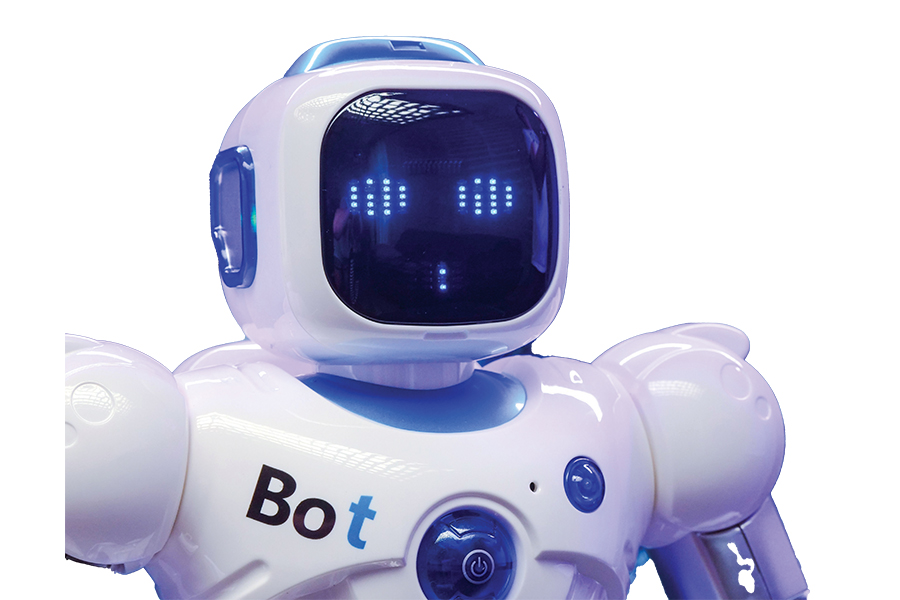
From self-driving cars to AI-powered assistants, automation is advancing rapidly.
But could robots ever take over flooring installation? We asked ChatGPT…
EVERY time a new technology comes along, somebody inevitably asks the same question: Will this replace jobs?
When it comes to commercial flooring, the question has become increasingly relevant as artificial intelligence, robotics and automation continue to make headlines. We’ve all seen the videos. Robots laying bricks. Robots serving coffee. Robots assembling cars. It doesn’t take much imagination to picture a machine rolling onto a construction site and fitting flooring all day without needing a tea break.
So, will robots ever replace floorlayers?
The short answer is no.
The longer answer is that robots will almost certainly change floorlaying, but replacing skilled floorlayers altogether is a very different proposition.
The reason is simple: flooring installation is messy.
Not physically messy, although it often is, but messy in the sense that every project is different. Manufacturing environments are ideal for robots because everything is predictable. The same component arrives at the same place at the same angle thousands of times per day. Construction doesn’t work like that.
A robot might be able to install LVT perfectly on a clean, flat, empty test floor in a laboratory. The real challenge is walking onto a refurbishment project where the subfloor is uneven, the walls aren’t square, the drawings don’t match reality and somebody has left a pile of materials exactly where the installer needs to work.
Human beings are remarkably good at adapting to these situations. Experienced floorlayers solve problems constantly without even realising they’re doing it. They assess conditions, adjust plans, make judgement calls and find practical solutions. These are precisely the tasks that remain difficult for machines.
That’s not to say robotics won’t make inroads into the sector.
We’re already seeing increasing automation in manufacturing, warehousing and logistics. Autonomous vehicles are being tested across multiple industries. Robotic surveying equipment can map buildings with extraordinary accuracy. AI can already generate take-offs, estimate quantities and assist with project planning.
The flooring industry won’t be immune to these developments.
It’s entirely possible that future sites could feature robotic floor preparation equipment capable of grinding, cleaning or levelling large areas with minimal human intervention. Autonomous transport systems could move materials around site. AI-powered measuring tools could reduce surveying time from hours to minutes.
But notice something important: none of those innovations actually replace the floorlayer.
They simply allow floorlayers to spend less time on repetitive tasks and more time on the activities that require skill and judgement.
History suggests this is what usually happens when technology enters a profession. Computers didn’t replace accountants. CAD software didn’t replace architects. Power tools didn’t replace joiners. Instead, those professions became more productive and efficient.
Flooring is likely to follow the same path. There’s also another factor that often gets overlooked in discussions about automation: economics.
Could somebody build a robot capable of fitting flooring? Probably.
Could they build one that works across every flooring type, every substrate, every building and every site condition while remaining affordable?
That’s a much tougher challenge.
A robot designed to install carpet tiles in a large open-plan office might be viable. A robot designed to fit intricate sheet vinyl details in a healthcare environment, complete bespoke stair nosings, undertake floor preparation and handle unexpected site issues is another matter entirely.
The more flexibility you require, the more expensive and complex the technology becomes. This is one reason why many predictions about robots taking over construction have repeatedly failed to materialise. The technology is often impressive. The business case is much harder to justify.
Ironically, the biggest impact of AI on flooring may not occur on site at all.
Administrative tasks are already being transformed. Specifications can be analysed faster. Product recommendations can be generated in seconds. Customer enquiries can be handled automatically. Marketing content can be produced more efficiently. Data can be interpreted in ways that would have taken humans days or weeks.
For flooring businesses facing skills shortages, labour pressures and increasing competition, these tools could prove invaluable.
Yet even here there is a lesson.
AI is at its best when dealing with information. Floorlaying is about people, environments and physical reality.
A computer can tell you which adhesive to use. It can’t always tell you why the site manager suddenly looks worried. It can analyse a specification. It can’t negotiate with a client who’s changed their mind three times before lunch.
The flooring industry remains fundamentally human.
In fact, as technology advances, the value of genuinely skilled people may increase rather than decrease. When routine tasks become automated, expertise becomes more important, not less.
The floorlayer of 2040 may carry laser scanning equipment, use AI-powered project management software and work alongside automated preparation tools. They may be far more productive than today’s installer.
But they will still need technical knowledge, craftsmanship, communication skills and the ability to solve problems when reality refuses to cooperate with the plan.
So, will robots ever replace floorlayers? Not anytime soon.
The more interesting question isn’t whether robots will take flooring jobs. It’s how flooring professionals can use emerging technologies to become faster, more productive and more profitable.
Because if history teaches us anything, it’s that the winners are rarely those who fight technology. They’re the ones who learn how to work with it.